
Newsletter Q1 2013

Welcome to our summary of the best of the sustainability and environmental compliance news items that appeared on our website www.environet.ie over the past quarter. We now have over 500 Irish environmental professionals subscribing to our service. This is a free service, issued every quarter. If you wish to unsubscribe please click the link at the end of this mail.
You can now follow us on Twitter at http://twitter.com/#!/EnvironetIre where our news items will also appear.
Best Regards
Gerard Kelly
CONTENTS
EPA Launches Air Quality Index (16/4/2013)
Emissions Trading Scheme In Trouble (17/4/2013)
Shocking Report on Pristine Water Bodies in Decline (25/4/2013)
App of the Quarter – Evernote (24/4/2013)
EPA Launches Air Quality Index (16/4/2013)

On 15th April 2013 the EPA launched a new on-line service which will allow users access to information on air quality in their area. The Air Quality Index for Health is calculated hourly and is represented on a colour coded map of Ireland. The intention is that the public, and especially those with respiratory or cardiovascular conditions, will be able to have access to information which will be updated on an hourly basis.
The AQIH is based on measurements of five air pollutants all of which can harm health. The five pollutants are:
- Ozone gas;
- Nitrogen dioxide gas;
- Sulphur dioxide gas;
- PM2.5 particles;
- PM10 particles.
The above parameters are reportedly monitored on an hourly basis and the worst of the five results will be used to indicate current air quality on a scale of 1 to 10, 1 being Good and 10 being Very Poor.
The country is then divided into 6 regions for the purposes of reporting. These are:
- Dublin City;
- Cork City;
- Towns with populations > 15,000;
- Towns with populations > 5,000 and < 15,000;
- Rural West ;
- Rural East.
Advice is given regarding the precautions vulnerable people should take when air quality reaches particular levels in their area. Overall this is a good service from the EPA and will provide people with the information to make informed decisions, which is always a good thing. However, particularly for asthma sufferers, the most significant health impact parameter between April and October each year is the pollen count. A map combining the information from the EPA and a pollen count would be very useful indeed.
The EPA’s Air Quality Index for Health Map can be accessed here http://www.epa.ie/air/quality/
Emissions Trading Scheme In Trouble (17/4/2013)
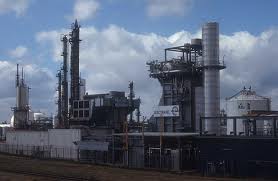
On 16th April 2013 the European Parliament decided to reject proposals which were needed to save the emissions-trading system (ETS) from collapse. The price of carbon fell by 40%.
The scheme is the world’s largest carbon market, trading allowances to produce carbon which cover about half the European Union’s total carbon emissions. The scheme is administered in Ireland by the EPA through the issuance of Greenhouse Gas (GHG) permits. Partly because of weak industrial demand and partly because the EU gave away too many allowances in the first place, there is massive oversupply in the carbon-emissions market. Prices fell from €20 per t in 2011 to just €5 per t in February 2013.
In an attempt to remedy the situation the European Commission planned to take about 900m tonnes of carbon allowances off the market and reintroduce them in about five years time when, it was hoped, demand would be stronger. This was the proposal that the European Parliament turned down. The main reason that MEPs voted against it was apparently a belief that energy prices for consumers would rise. Undoubtedly a new proposal will be brought before the European Parliament in the short term.
Until a more permanent reduction is agreed then ETS carbon allowances are likely to trade at prices that will not incentivise the reduction of carbon emissions. Therefore our current GHG permitting system in Ireland will have little or no real impact on carbon emissions.
Shocking Report on Pristine Water Bodies in Decline (25/4/2013)

The EPA has recently published what has to be seen as a shocking report on the status of our high ecological quality river sites. The report was prepared under the EPA’s STRIVE programme. The report confirms a serious decline in the number of high quality river sites. Between 1998 and 2007 there has been a 48% decline in the number of High status sites (Q5 or Q4-5 sites, based on macroinvertebrate biological quality monitoring).
The Water Framework Directive (WFD) was brought into force in Ireland in 2000. One of the main aims of the WFD is to ensure that waters classified as Good or High status would not be allowed to deteriorate. Those below Good status (Poor and Bad) are to be improved to Good status by 2027 at the latest.
The report confirms that not enough co-ordinated action has taken place to halt the decline of our high status sites. Much of the blame for this inaction has been laid at the door of the EPA itself. The report recommends;
- High status catchment delineation and prioritisation of protection measures;
- The establishment of a monitoring system by the EPA;
- The establishment of a co-ordinated approach to planning, agricultural, industrial and recreational activities in high status catchments;
- That more emphasis is placed on high status bodies as opposed to bringing Poor and Bad status water bodies to Good status;
- That County Development Plans should reflect the sensitivity of High status water bodies.
Given that the current situation is a clear breach of the WFD it is highly likely that Ireland will again be prosecuted for its failure to comply with European legislation. To date the EPA seems to have focused on its role in monitoring, as opposed to protecting, the environment. We now have a bank of data showing the decline of our river systems. Surely it is time for a co-ordinated approach to halt this decline. The EPA is the only body in a position to make this happen. The report can be downloaded here http://www.epa.ie/pubs/reports/research/water/strivereport99.html
App of the Quarter – Evernote (24/4/2013)

Each quarter we pick one smartphone app which we believe enhances productivity or is particularly useful.
We have been using Evernote in Environet for the past 6 months or so. It can take some time to figure out how it can be useful, but after a while you begin to wonder how you managed without it.
Evernote’s main use is as a cloud based repository of information that would otherwise end up being filed away in paper copy and would quickly become inaccessible. It can be used to;
- Save handwritten meeting notes and make them searchable;
- Clip webpages for reading at a later stage;
- Take photos of receipts and store, getting rid of paper copies;
- Take photos of business cards, allowing them to be searchable;
- Take photos of newspaper cuttings, allowing them to be searchable;
- Attach files to particular notes.
Outside of work it can be used to store;
- Shop opening times;
- Festival Brochures;
- School notices;
- Goods receipts.
This information is then synchronised and available on all platforms you might use including desktop, web, android, iPhone, iPad etc. Overall an excellent organisational tool.
Verdict: 5/5 Excellent App. Available on all platforms.